Saves a PDF to your device, so you can read it without internet.
 Nature, Nature, Nature! · Your guidebook
A day in Dhital.
There's no guide today, so this is your guide. Read it in the car, keep it open at the farm, and look things up as they happen. Nobody at the house speaks English, but everyone is glad you came.
The day at a glance
Pickup: 10 AM, at our parking
A private car waits at our parking, down the steps from reception, and brings you back.
Back: about 4 PM
The drive is about an hour each way.
Meals: with the family
All your meals today are included, fresh from the farm.
Language: Nepali
The driver speaks some basic English. Everyone in the family speaks only Nepali. Smiles and pointing work well.
Every day is different
What you see depends on the season and the family's work today. Not everything in this guidebook will happen on your visit.
What to wear and bring
Shoes that slip off easily
You take them off before going into the house.
Clothes that can get dusty
It's a working farm.
A hat, sunscreen and a water bottle
A charged phone, with our number saved
+977 985 602 2610, on WhatsApp too.
This guidebook, downloaded
The signal at the farm comes and goes.
Seven words that go a long way
Namaste
Hello, and goodbye. Say it with your palms together.
Dhanyabad
Thank you.
Mitho chha
It's tasty. You'll want this one.
Pugyo
That's enough, I'm full. Useful when someone keeps filling your plate, and they will.
Ramro chha
It's beautiful, it's nice.
Aama and Buwa
Mother and father. It's how you address the older women and men of the house.
Didi and Dai
Older sister and older brother. For anyone a little older than you.
In a Nepali home
Shoes off
Before you go inside, and always before the kitchen.
Respect the fire
The kitchen hearth is treated with care. Don't step over it or put your feet towards it.
Jutho
Food or water that has touched your mouth is jutho. Don't offer anyone food you've bitten into, and when you drink from a shared jug, pour it into your mouth without touching your lips to it.
Right hand
Give and take things with your right hand, or with both.
Photos
Ask first. A smile and a nod at your camera is enough.
Along the Seti and the Mardi
For about an hour you drive north-west from Sarangkot, out of the city and up the river valleys.
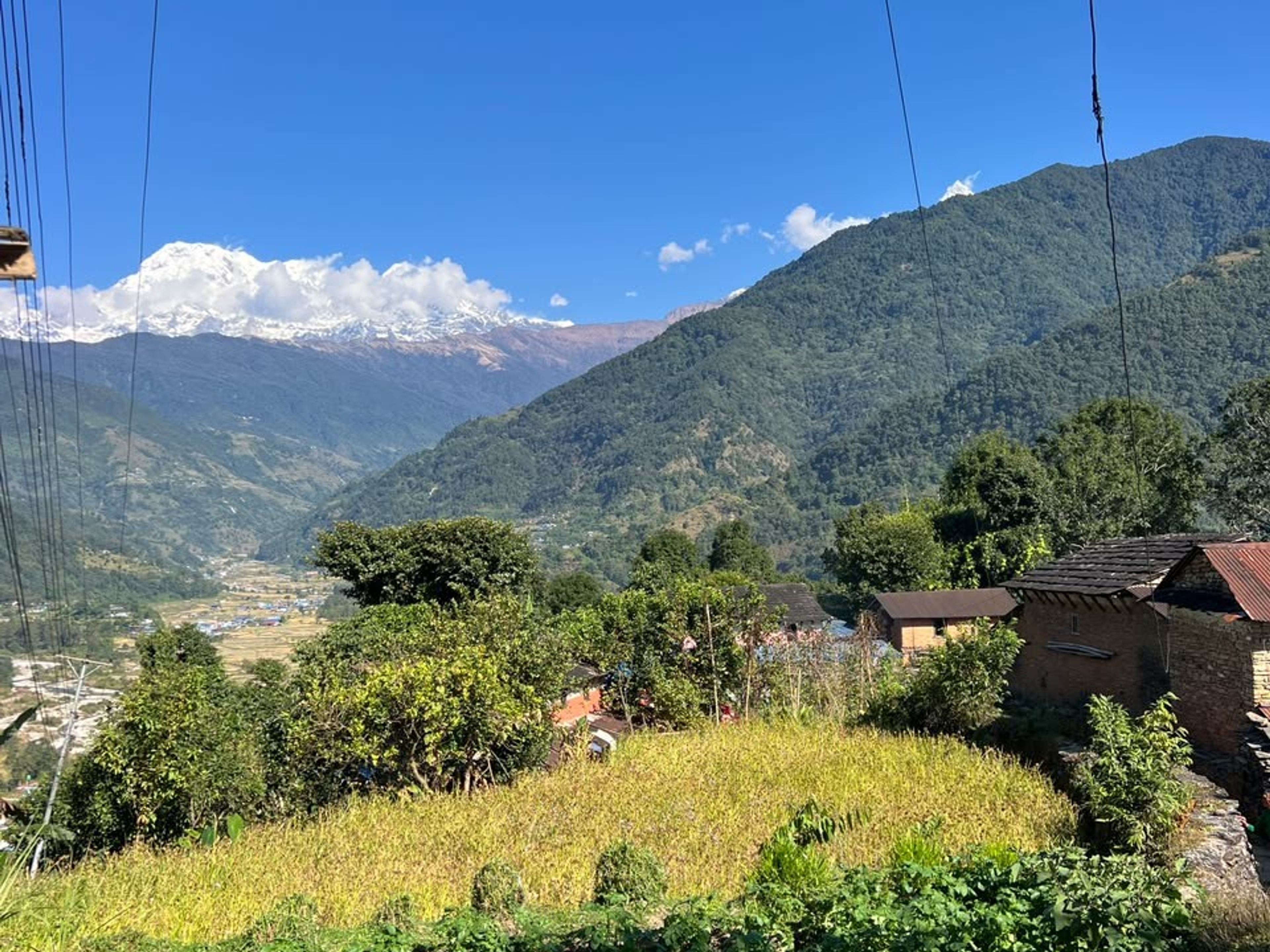
Seti means white. The river runs milky because of the fine limestone it carries down from the Annapurnas. The Mardi comes down from the slopes below Machhapuchhre, the Fishtail. Watch the fields change as you climb: rice on the flat land by the rivers, then terraces cut into the hills.
Stone, mud and wood
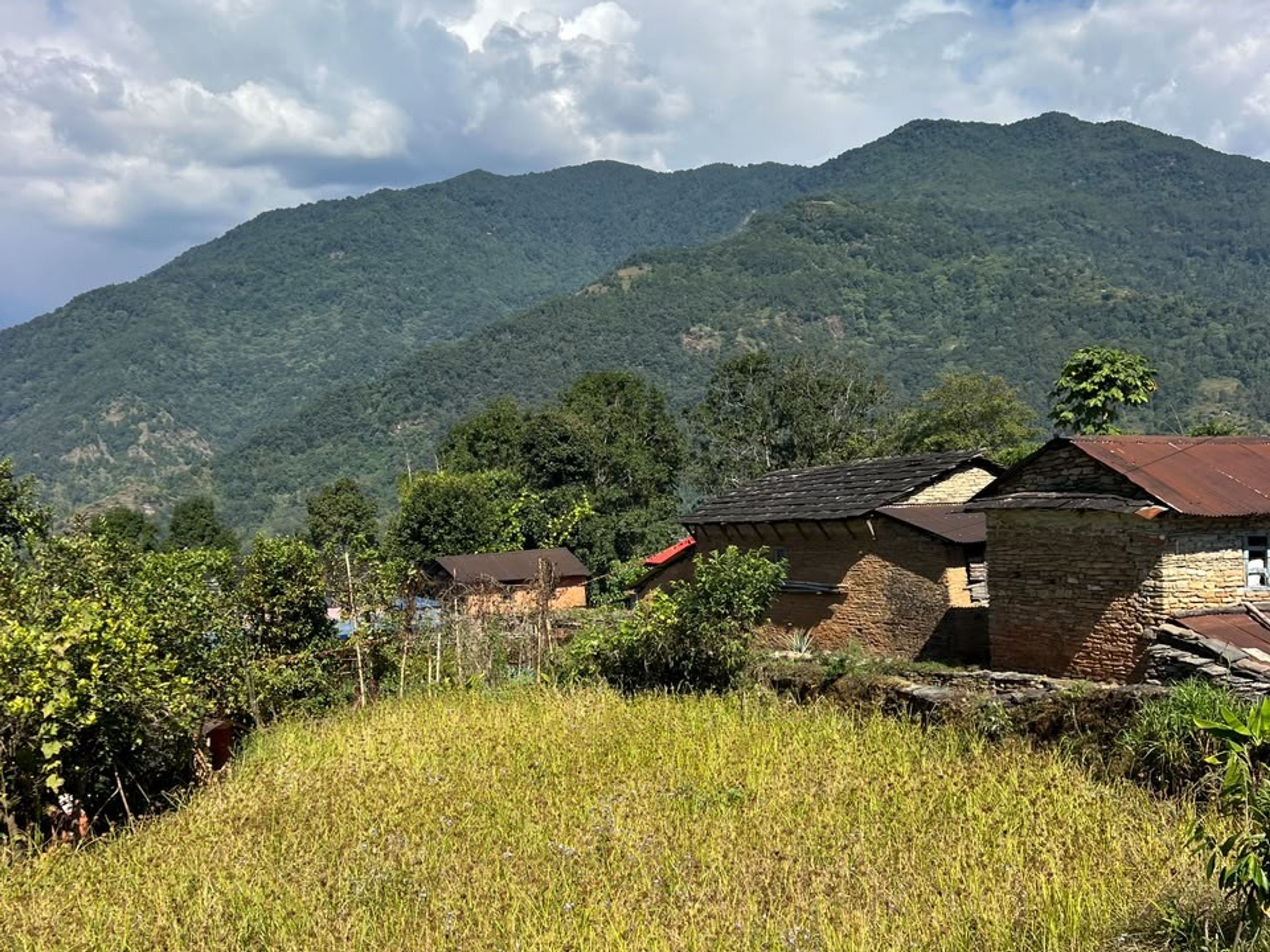
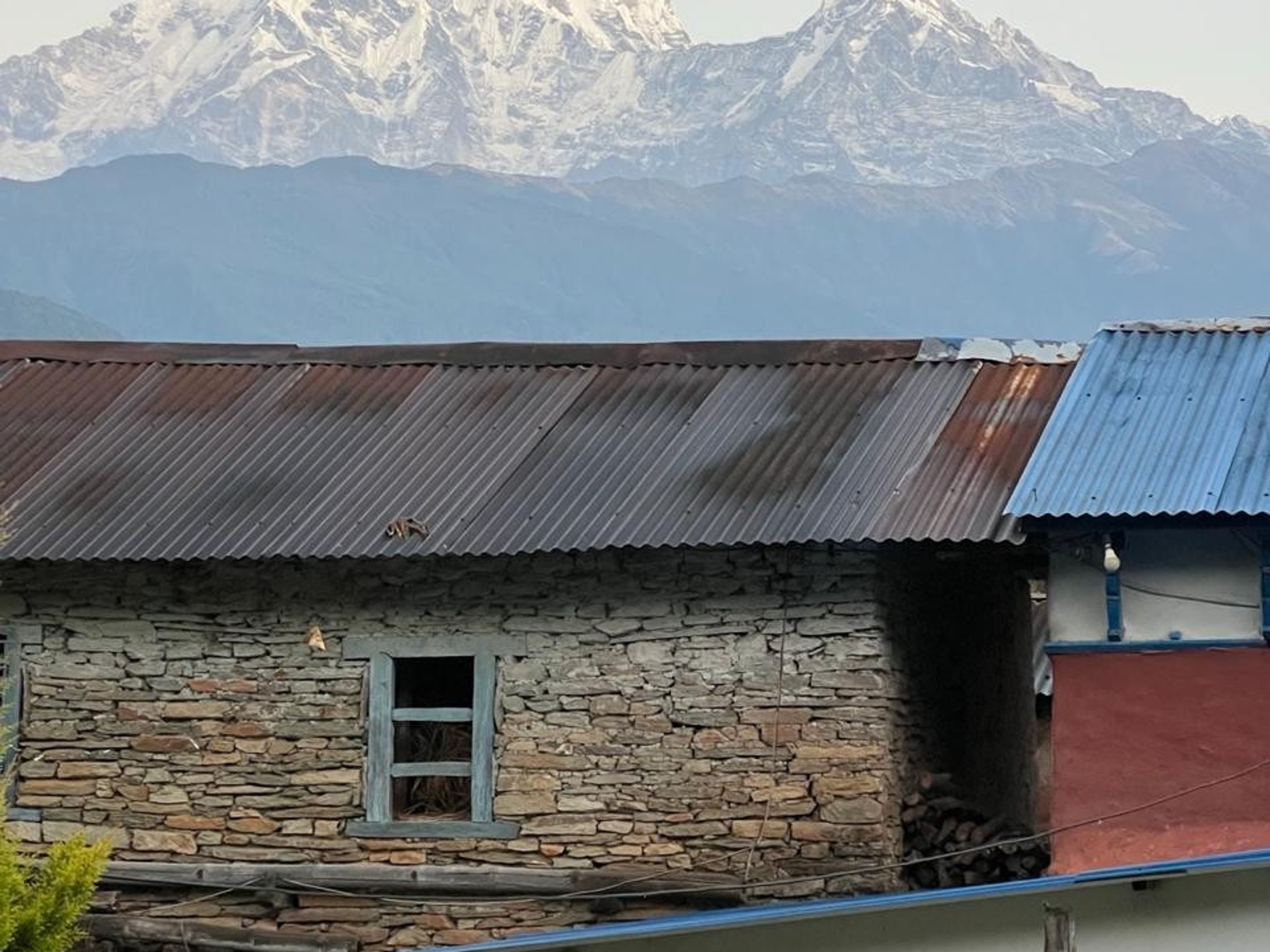
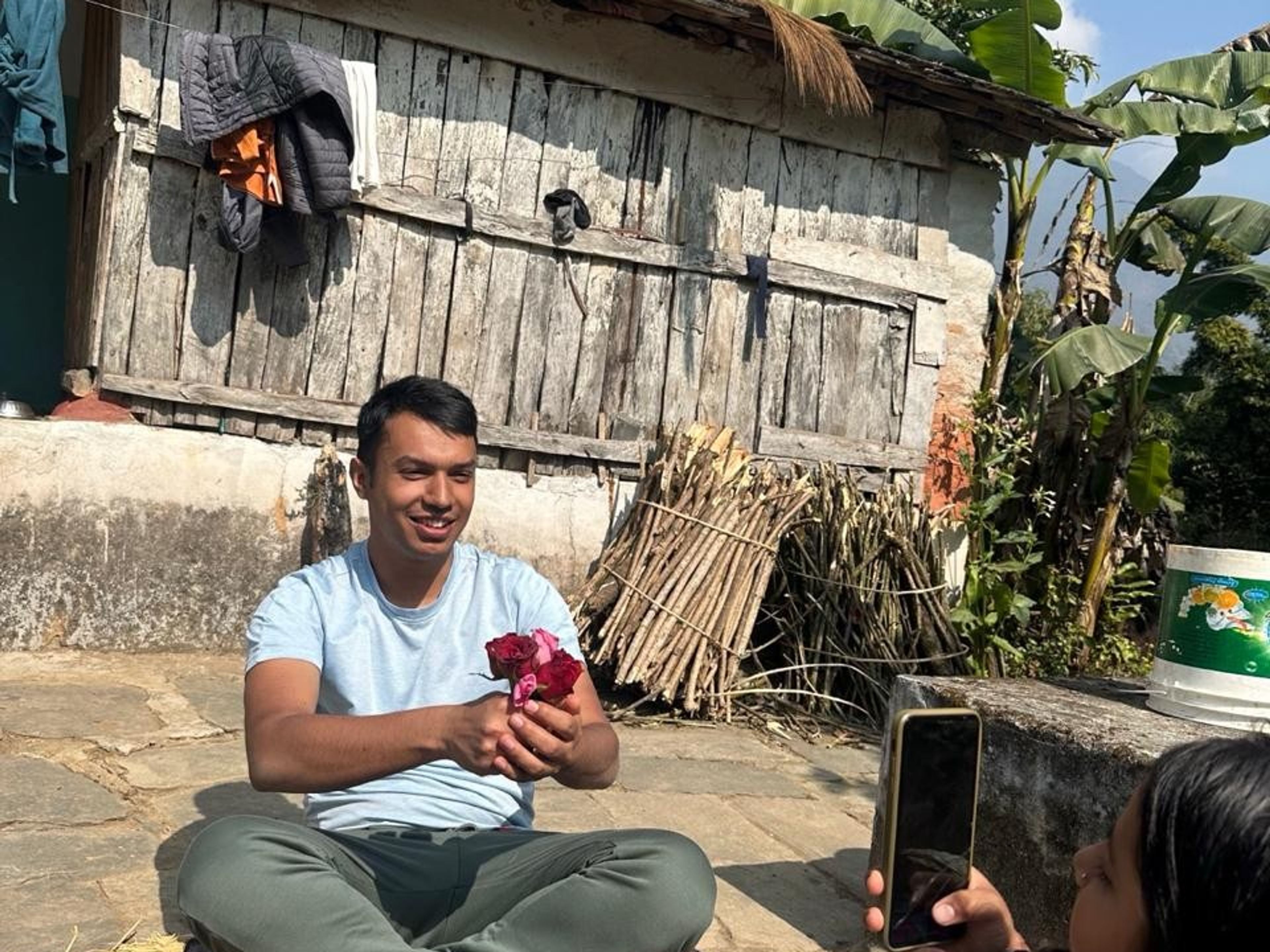
Look at the older houses in Dhital. Walls of flat stones laid in mud, beams and window frames of wood, roofs of slate or tin. Almost everything came from within walking distance.
Low walls, steep roofs
Kaski gets more rain than anywhere else in Nepal. Steep roofs shed the monsoon fast, and deep eaves keep the mud walls dry. Low houses stay out of the wind and are easier to keep warm.
Small windows
They keep the warmth of the fire in on winter nights.
The buffalo next door
The shed is built onto the house. The animals are close by and easy to look after at night, and their dung goes straight onto the fields.
Red and white clay
Walls are often plastered with red clay, rato mato, and white clay, kamero. Floors are wiped with a paste of mud and cow dung, which dries hard and keeps the dust down.
Upstairs
Grain, corn and hay are stored under the roof, where smoke from the fire keeps them dry.
Milk, dahi and ghee
Buffalo milk is richer and creamier than cow's milk. Nothing is wasted: every drop becomes something.
- 1
The buffalo is milked by hand, usually morning and evening.
- 2
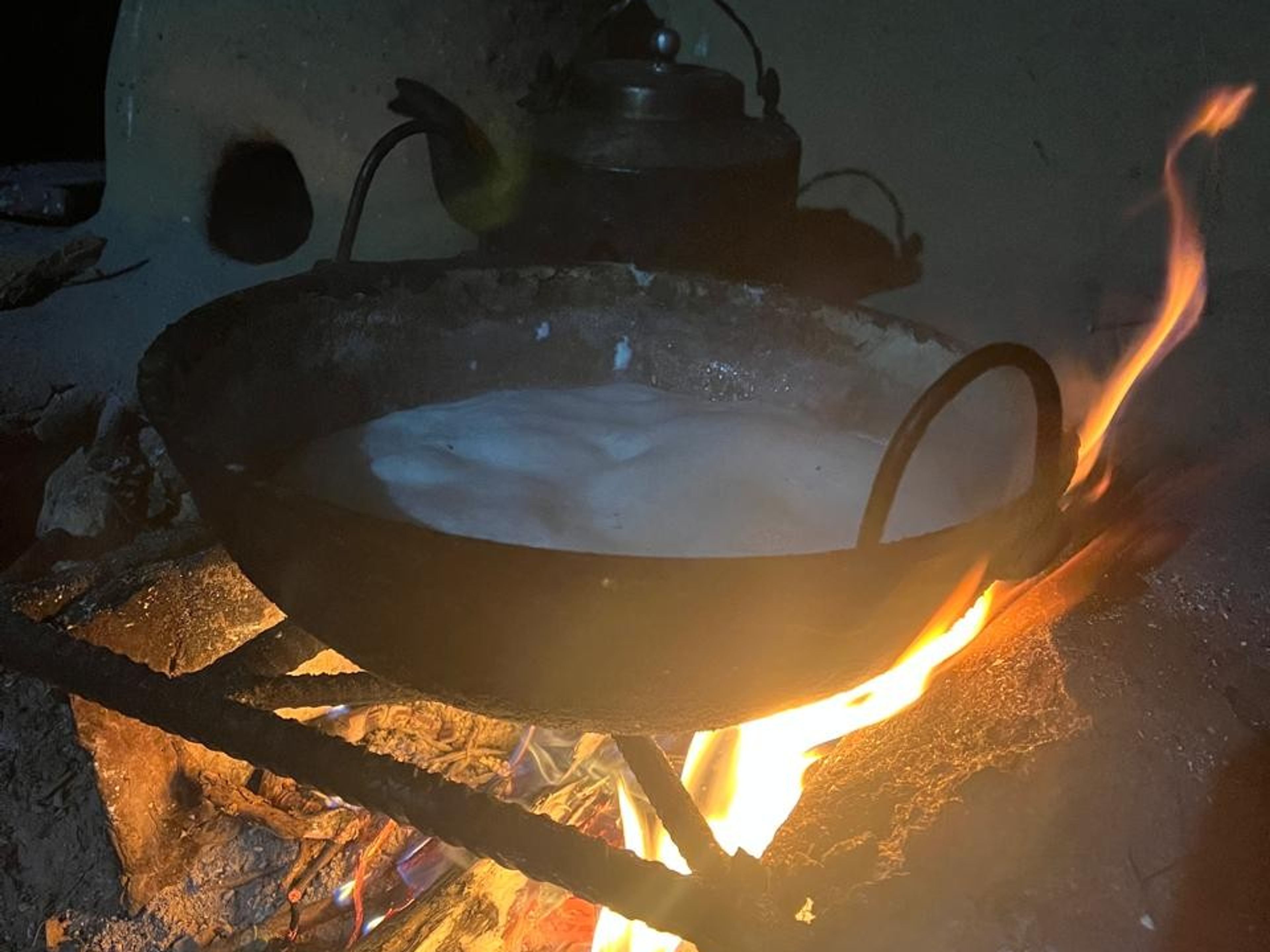
The milk is heated over firewood in a heavy iron pan.
- 3
Once it's warm, a spoon of yesterday's dahi is stirred in and it's left overnight. By morning it's dahi, homemade yogurt.
- 4
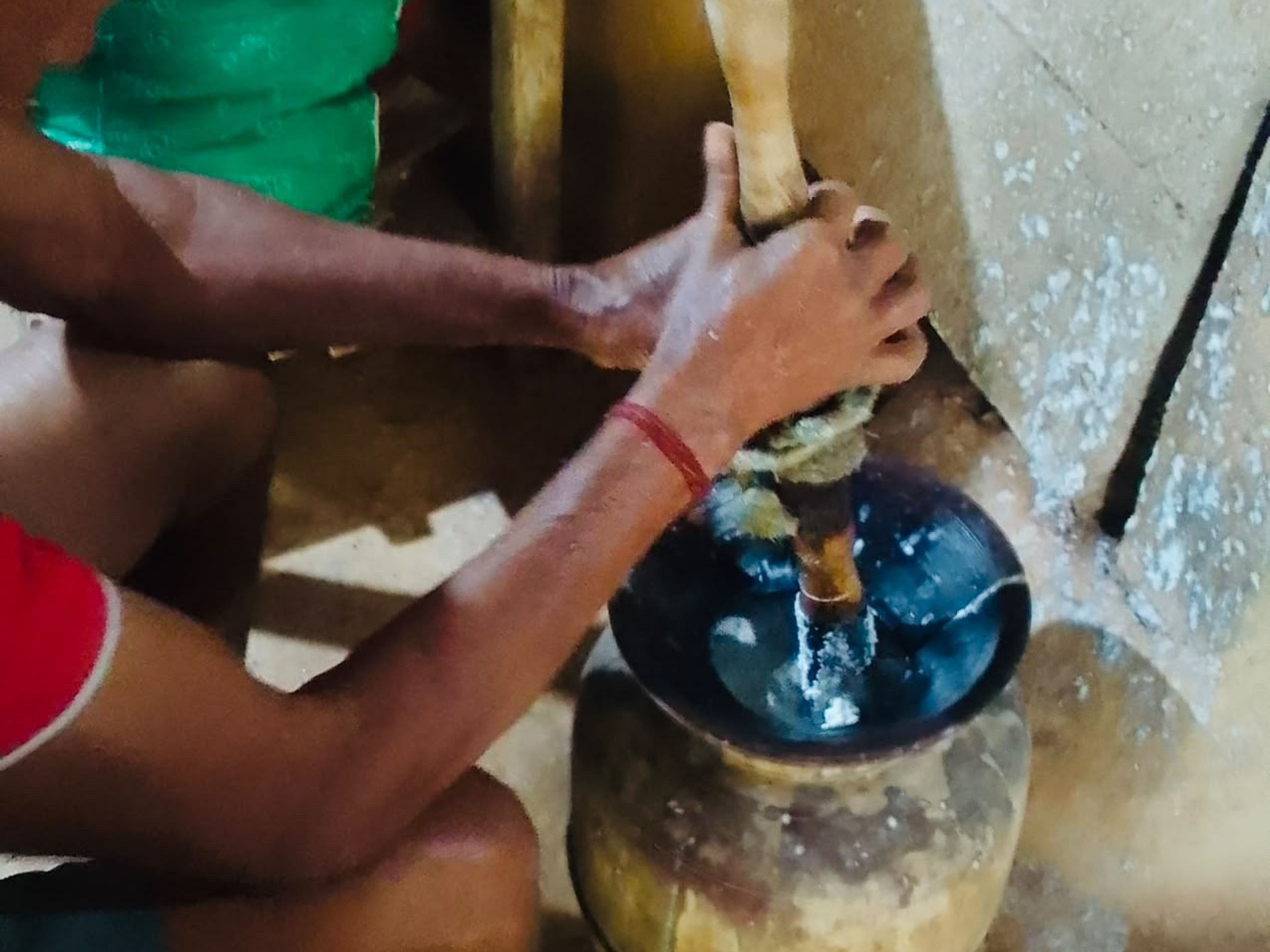
The dahi is churned in a pot with a wooden stick, the madani, twirled back and forth between the hands until the butter, nauni, comes together.
- 5
What's left is mohi, buttermilk, which is drunk with meals.
- 6
The nauni is heated slowly until it turns clear and golden. That's ghee, and it keeps for months without a fridge.
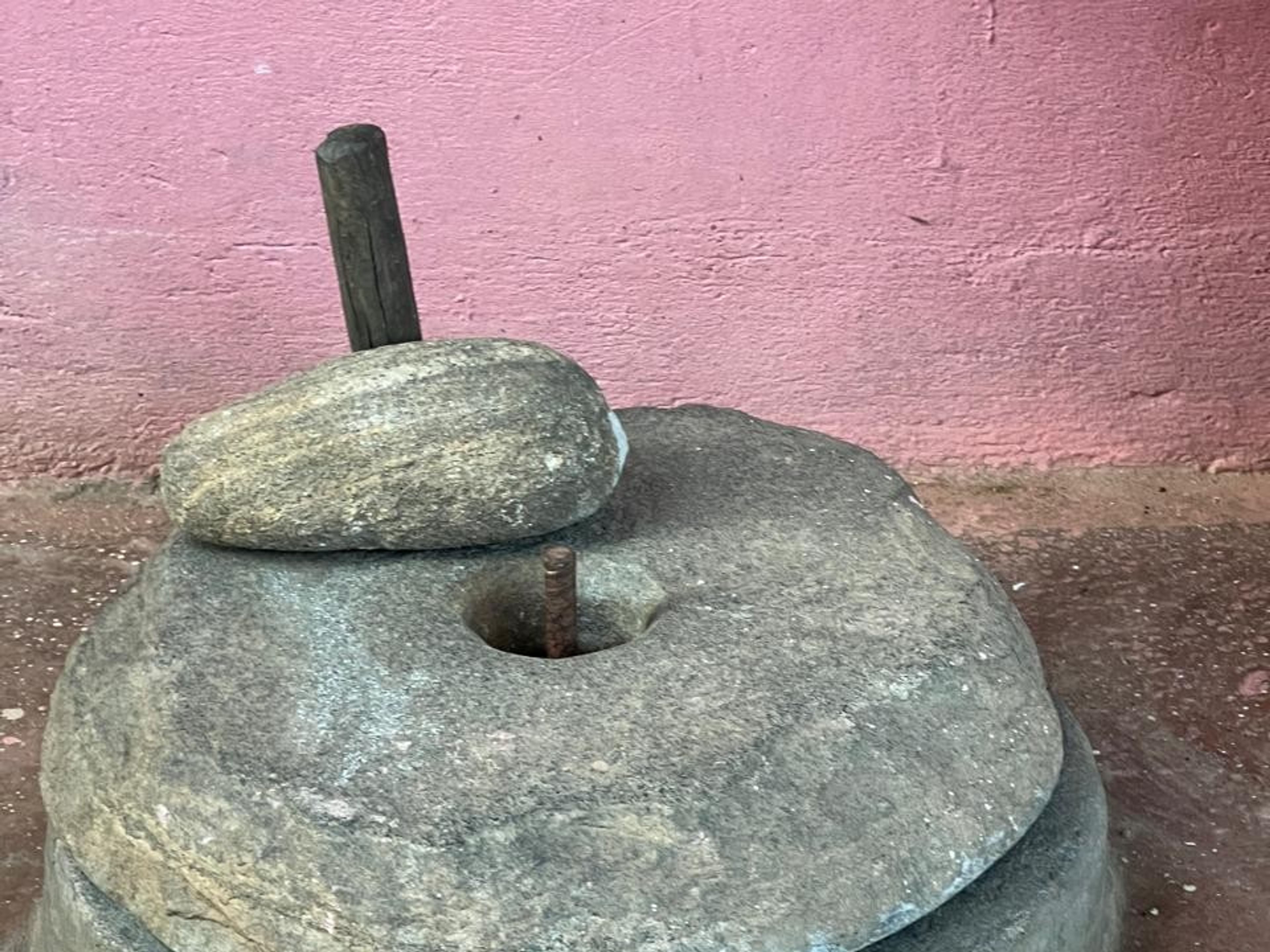
Millet on the jaato
The jaato is a hand mill: two round stones, the top one turned by a wooden handle. Grain goes into the hole in the middle and comes out as flour around the edge. It's slow, heavy work, and often sung to.
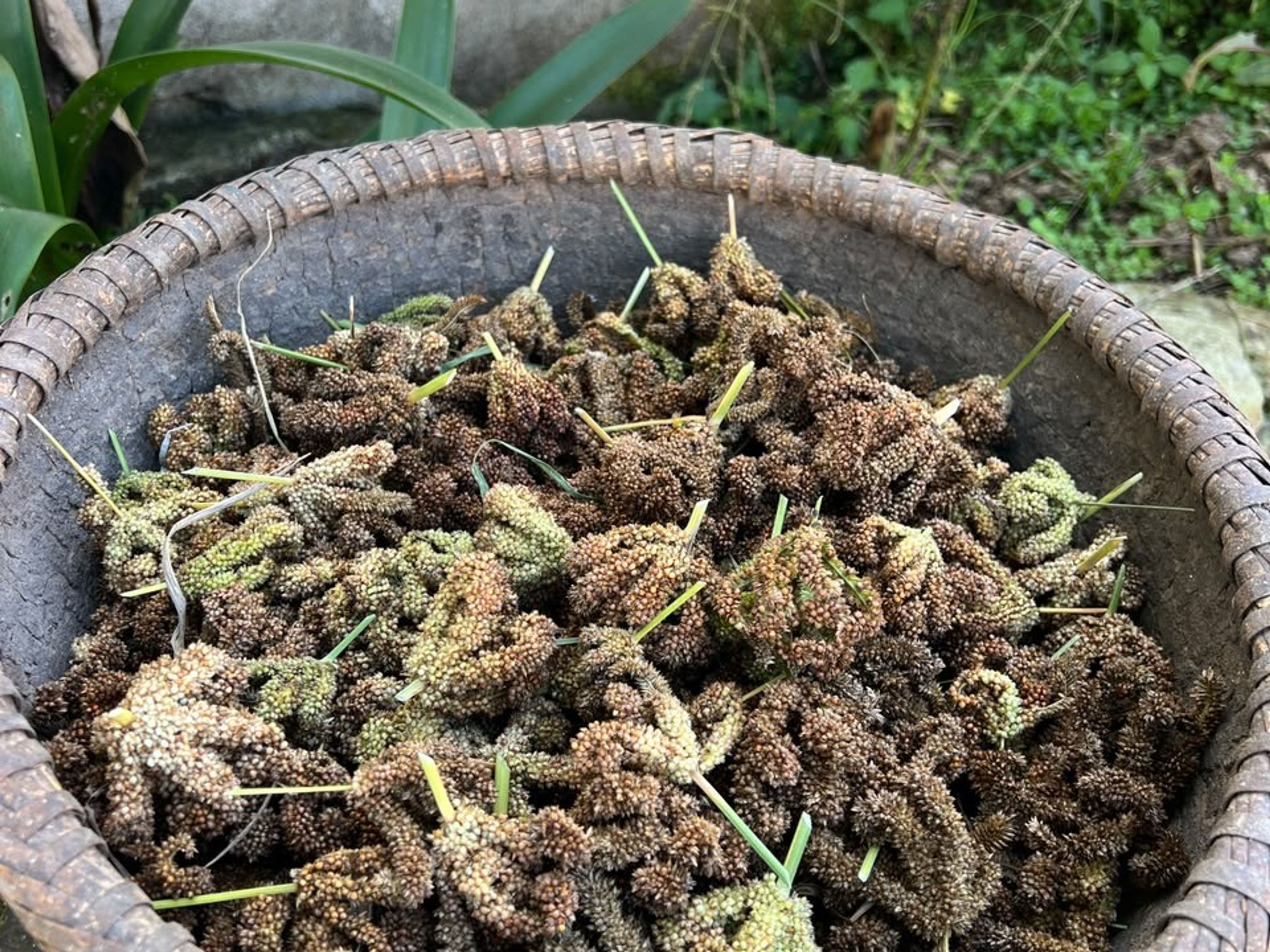
Kodo, finger millet
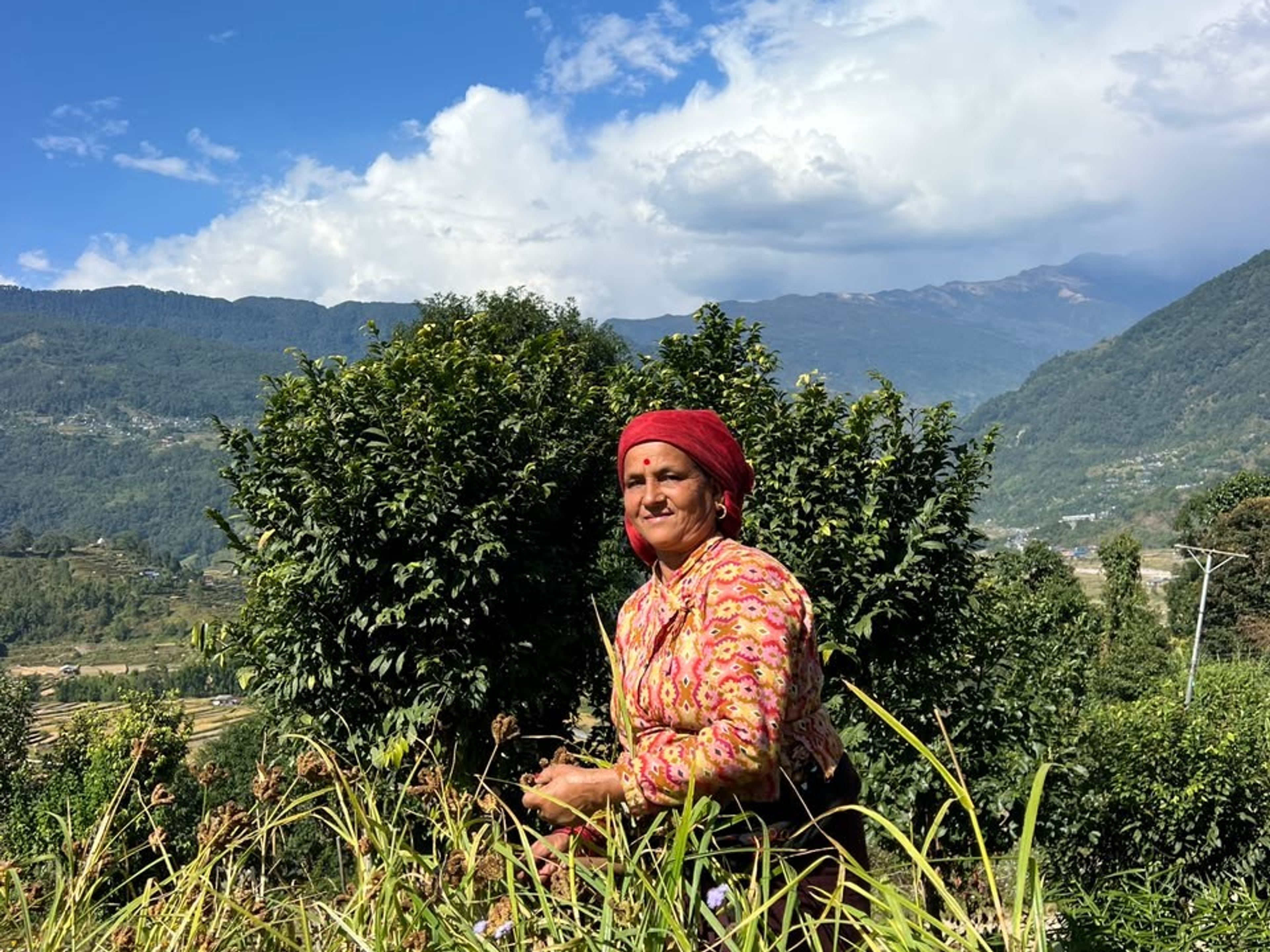
Grown on the dry terraces and cut by hand in autumn. It's naturally gluten-free and rich in calcium.
Gilo roti
A soft, moist bread of millet flour and water, cooked in a pan.
If the millet isn't in
You may see the jaato used for other grain, or not at all. It depends on the season.
Corn on the khottiya
When there's corn, it's roasted over the fire and eaten hot.
Chutney on a silauta
The silauta is a flat stone, the lohoro the round stone you rock across it. Tomatoes go on with chilli and salt, then coriander and mint picked from the garden a minute earlier.
Ask anyone in the village and they'll tell you it tastes better than from a blender. The stone crushes rather than slices.
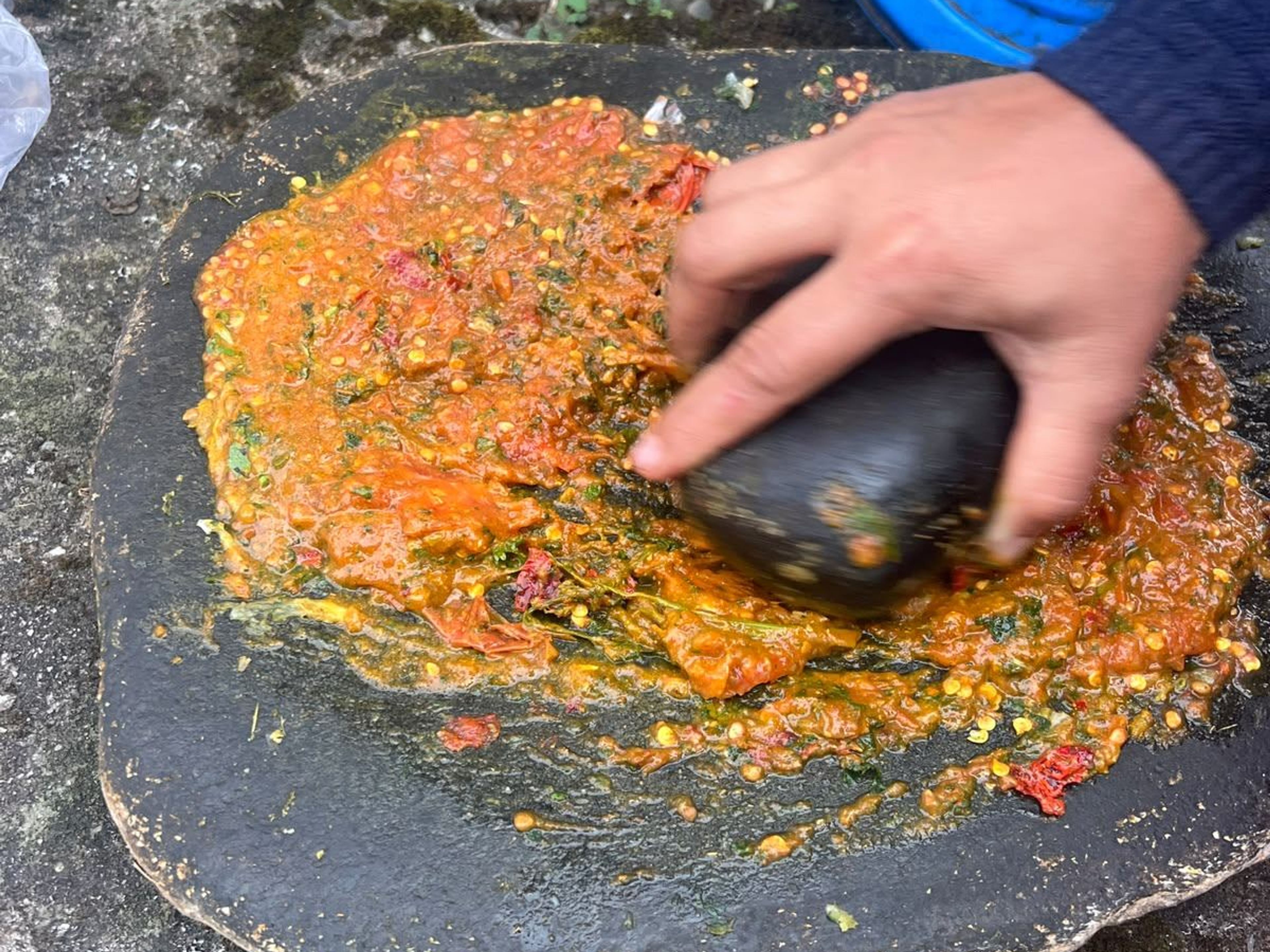
Grow what you can, eat what you grow
The terraces here are too steep and too small to farm for the market. So families grow a little of everything and eat what they grow. It's why village food is so fresh, and so healthy.
Rice
On the lower, wetter terraces, harvested in autumn.
Millet and corn
On the dry terraces higher up.
The kitchen garden
Beans climbing sticks, greens, coriander, mint, whatever the season allows.
Marigolds
Sayapatri, grown in the yard and strung into garlands for Tihar, the festival of lights.
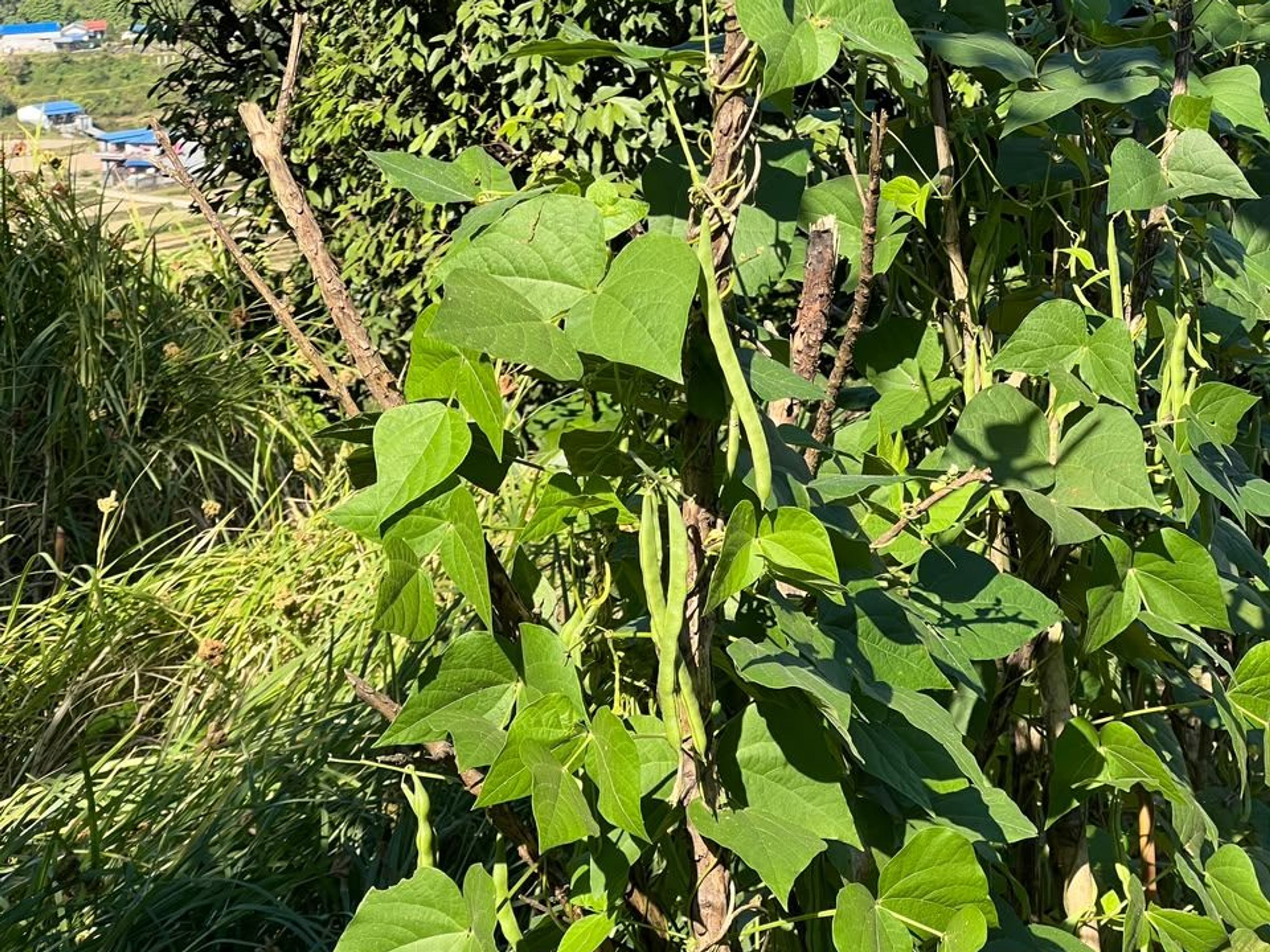
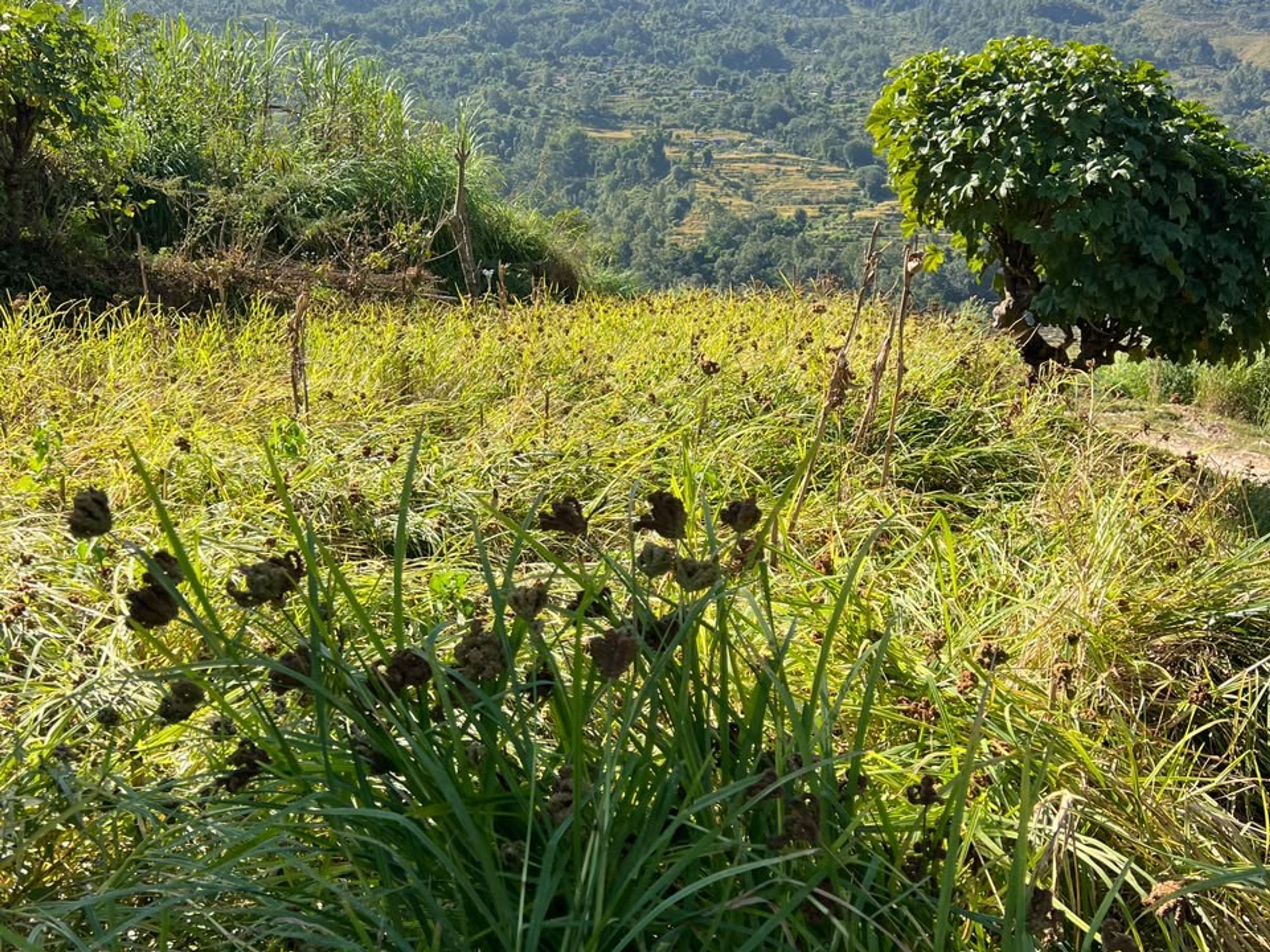
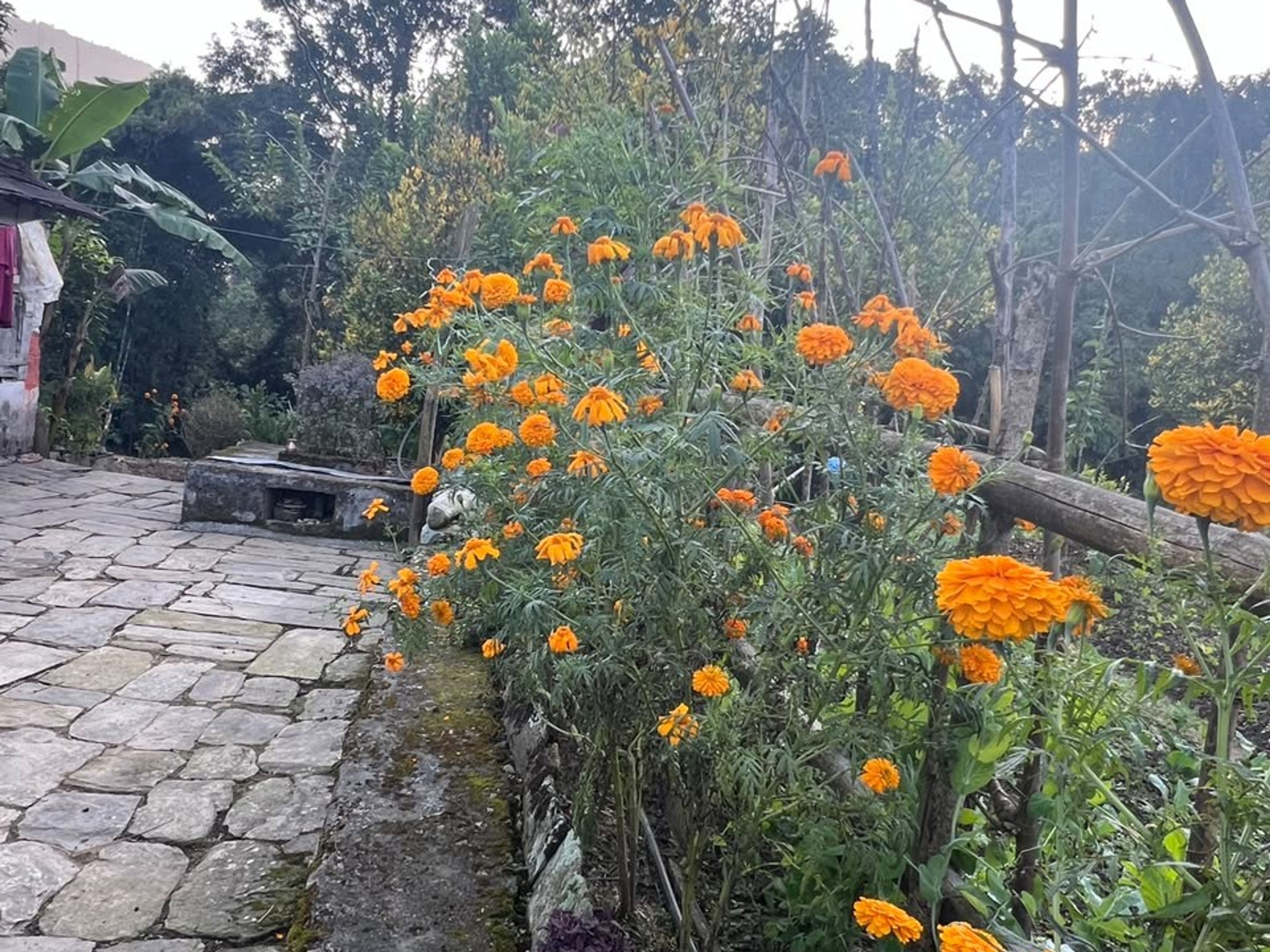
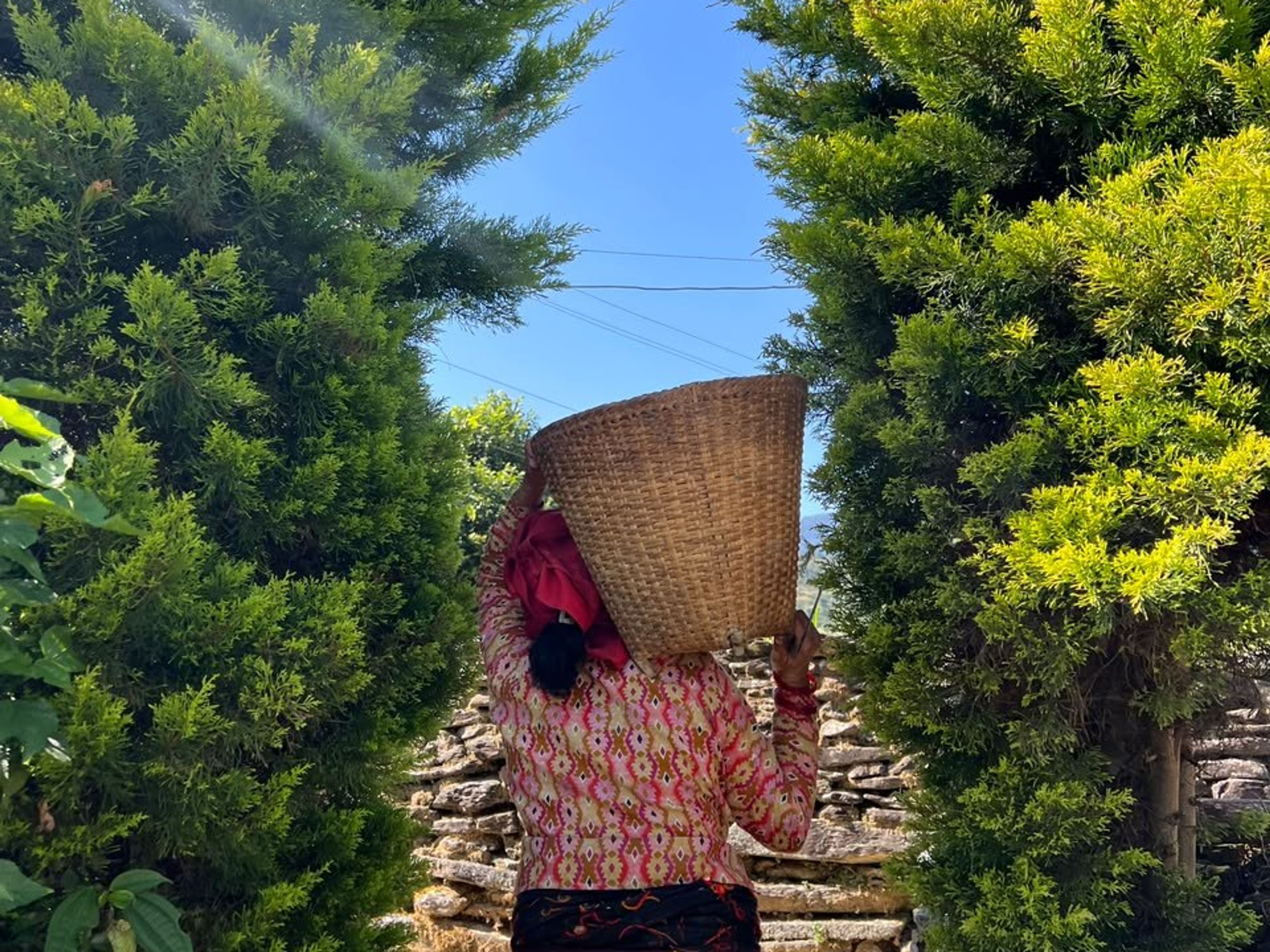
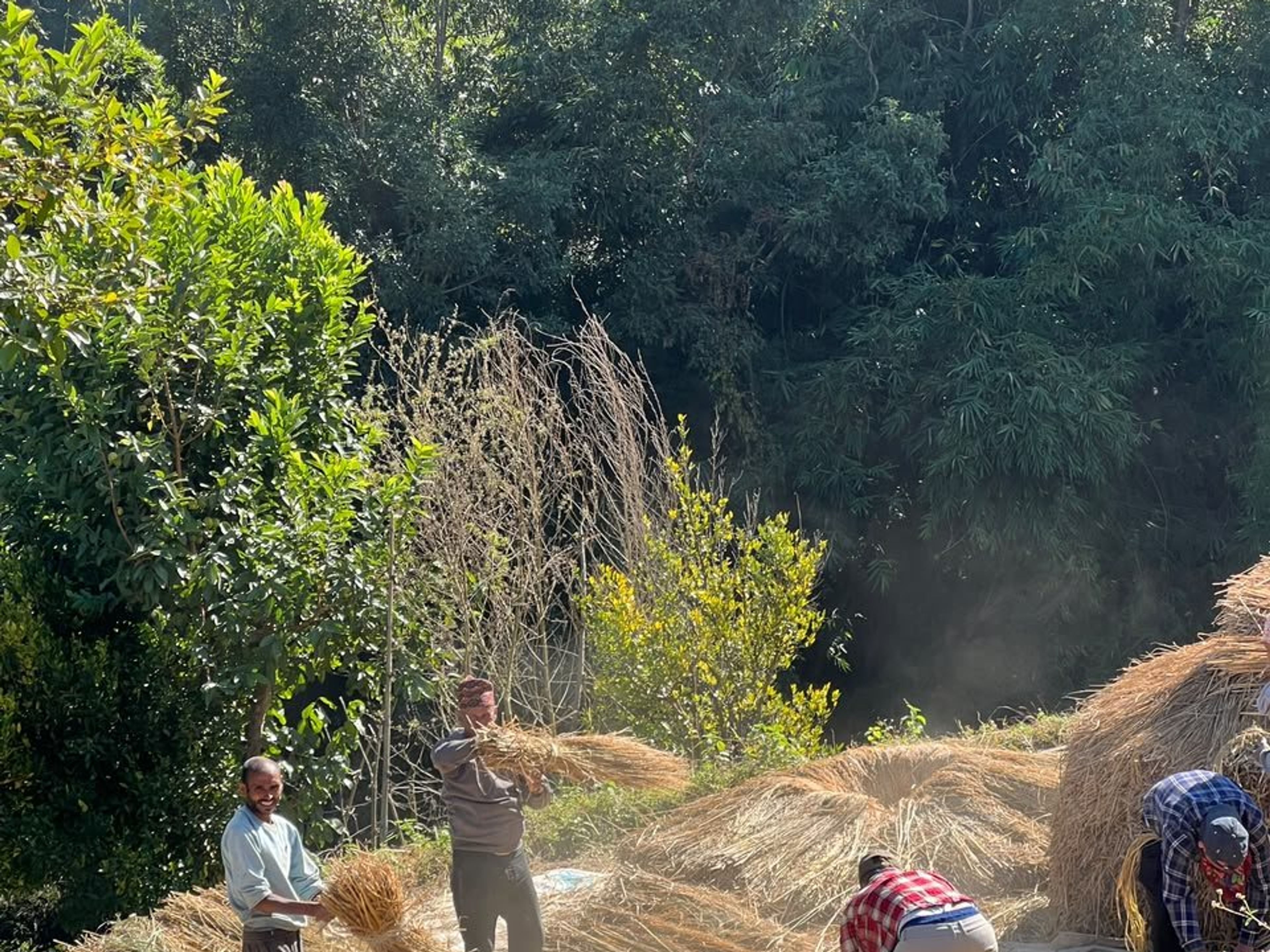
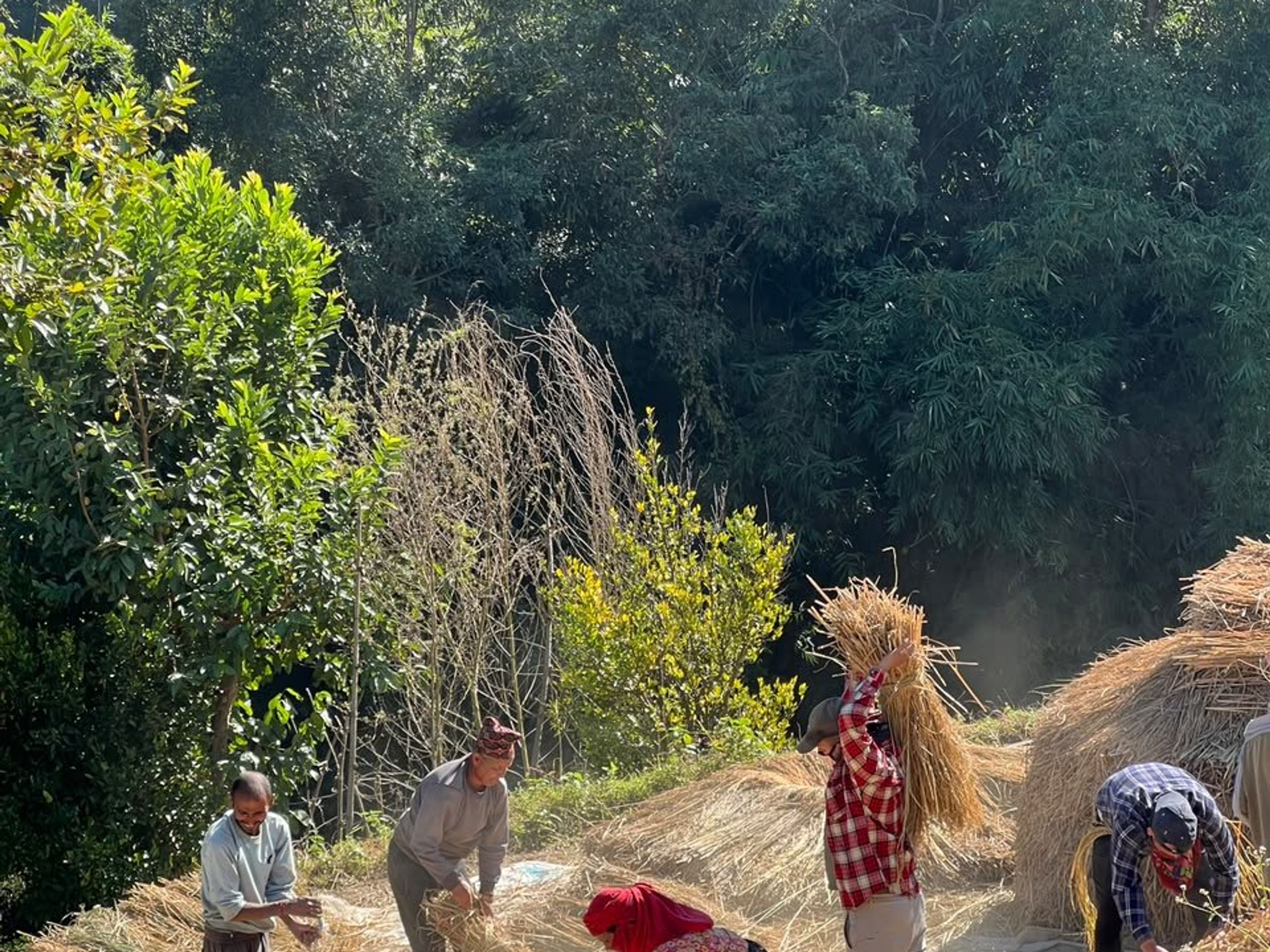
Paid in work, not cash
At harvest the neighbours come to work one family's fields, and next week that family works theirs. It's called parma. Nobody pays anybody: a day of help is paid back with a day of help.
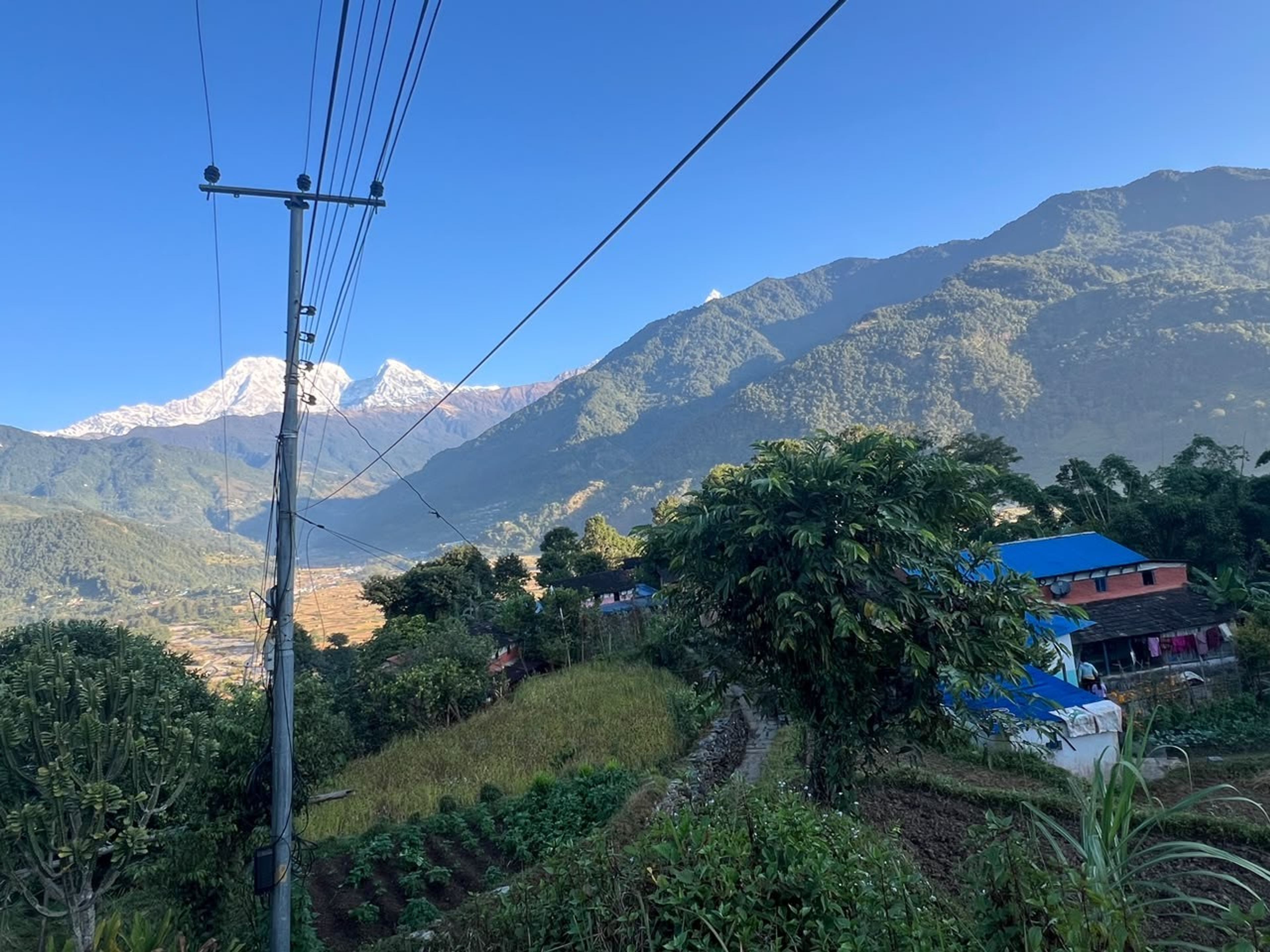
Light, only since 2000
Electricity first reached the village in 2000. Before that there was none of any kind. Even now, cooking is done on firewood gathered from the forest, and people sit on hand-woven mats in the sun.
We're a call away
Call or WhatsApp
+977 985 602 2610, any time of the day.
Feeling unwell, or want to come back early?
Tell us. We arrange a car straight away.
Can't make yourself understood?
Call us and hand the phone to the family. We'll translate.