

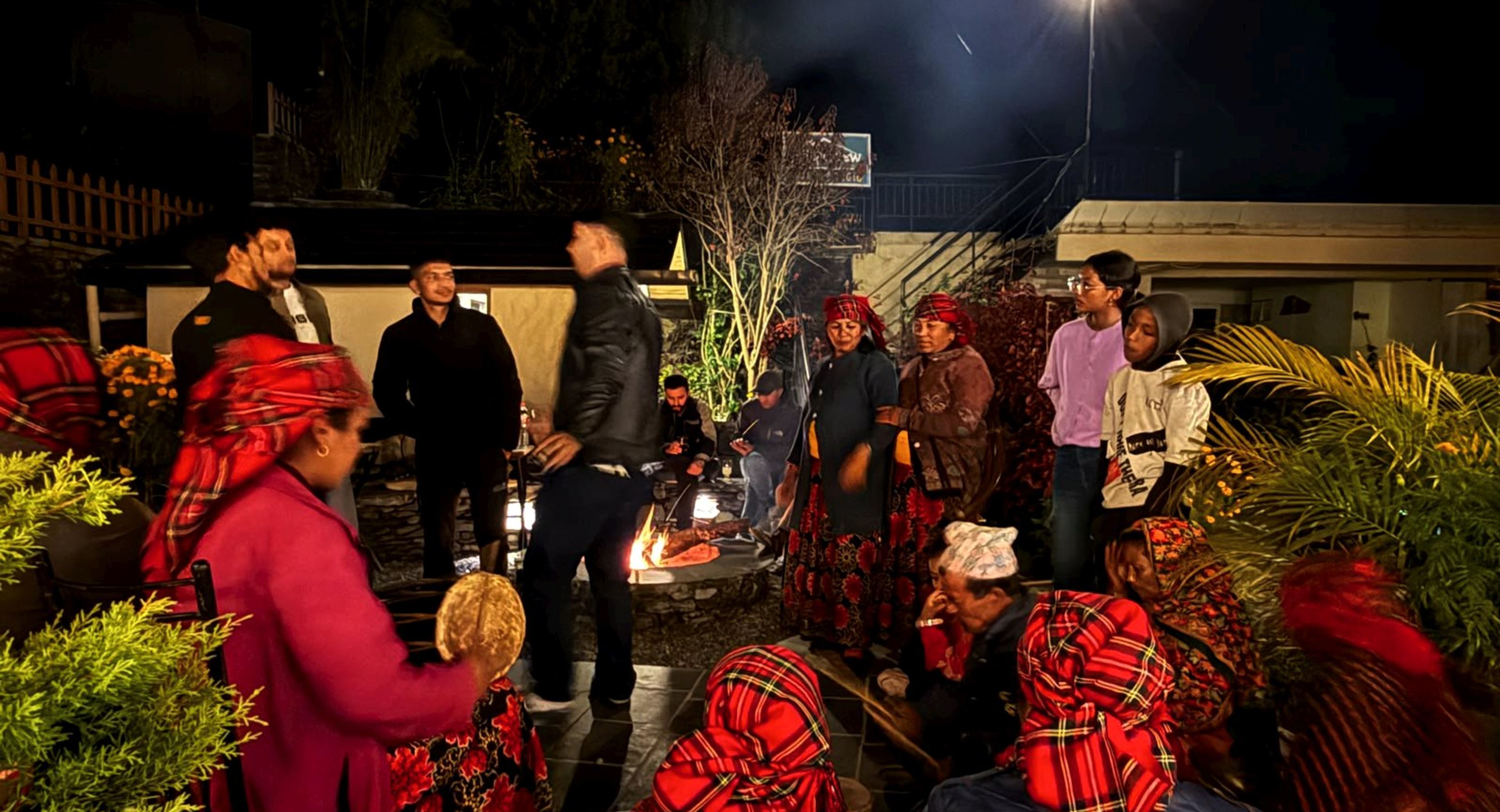
Local Band – Women's Group
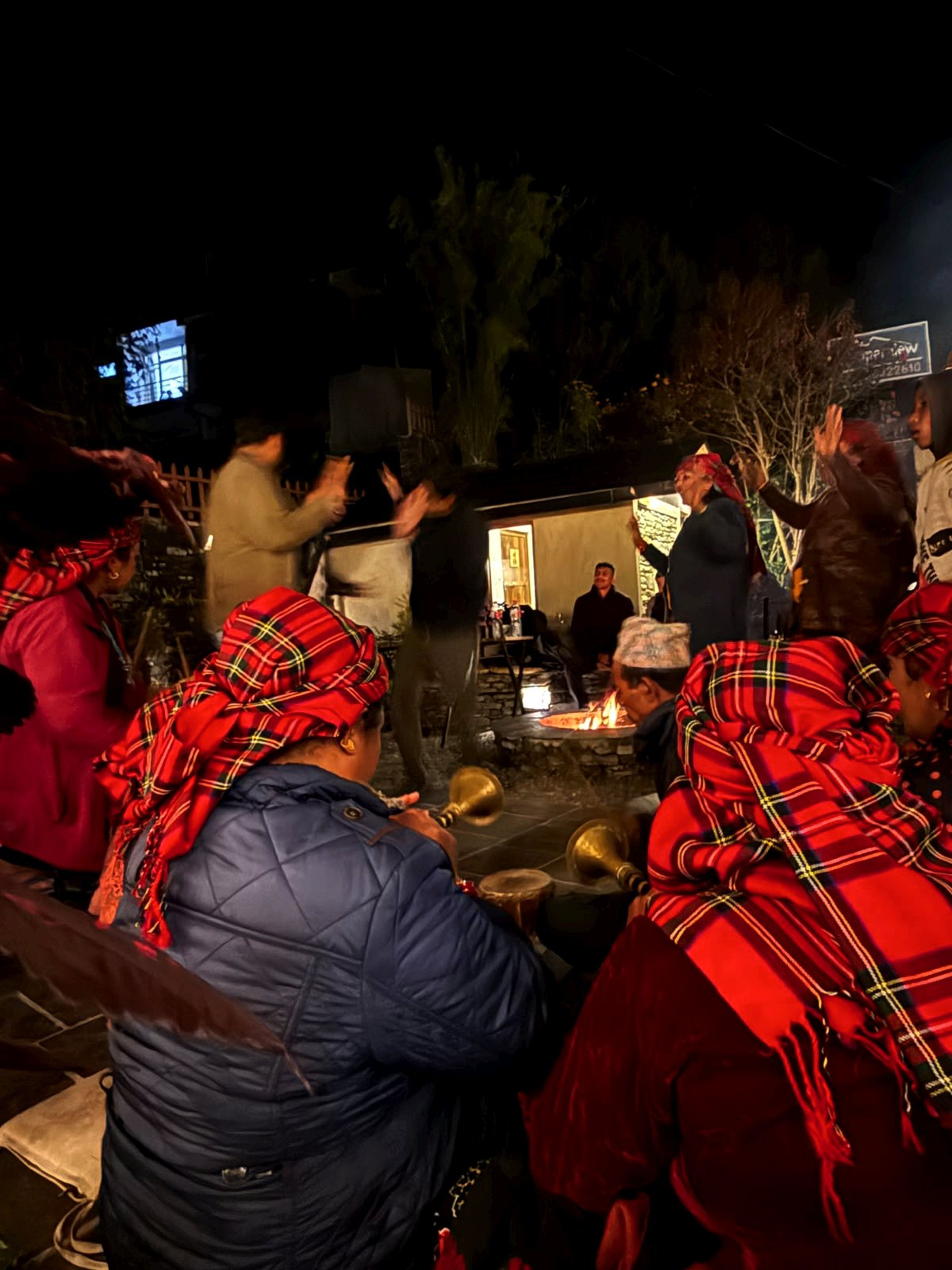
Panche Baja, Nepal's traditional band, played by Pariyar Didi-Bahini Samuha, a women's group from Sarangkot. Two hours of live music in our garden after dinner, around the fire.
- Duration
- 2 hours
- Time
- 8 to 10 PM, after dinner
- Where
- Our garden, outdoors
- Price
- USD 150per evening, not per person
Panche Baja is the band that has played at Nepali weddings and festivals for generations. In our village it's kept alive by Pariyar Didi-Bahini Samuha, a group of Pariyar women, and they come to our garden to play it for you after dinner.
This may be the last generation that knows how to play the baja, in our community and in many others in Nepal. Booking an evening pays the women to keep playing, and the group puts the money it earns into social work in the village. If the night is chilly, we light a fire in the garden.
“It was soul-recharging.”
That's what one of our guests said the morning after the band played for the end of Tihar. Turn the sound up and see for yourself.
After dinner, in the garden
- After dinner
The fire is lit
If the evening is chilly. Find a seat around it.
- 8 PM
The band begins
Drums, cymbals and the high, bright sanai.
- Through the evening
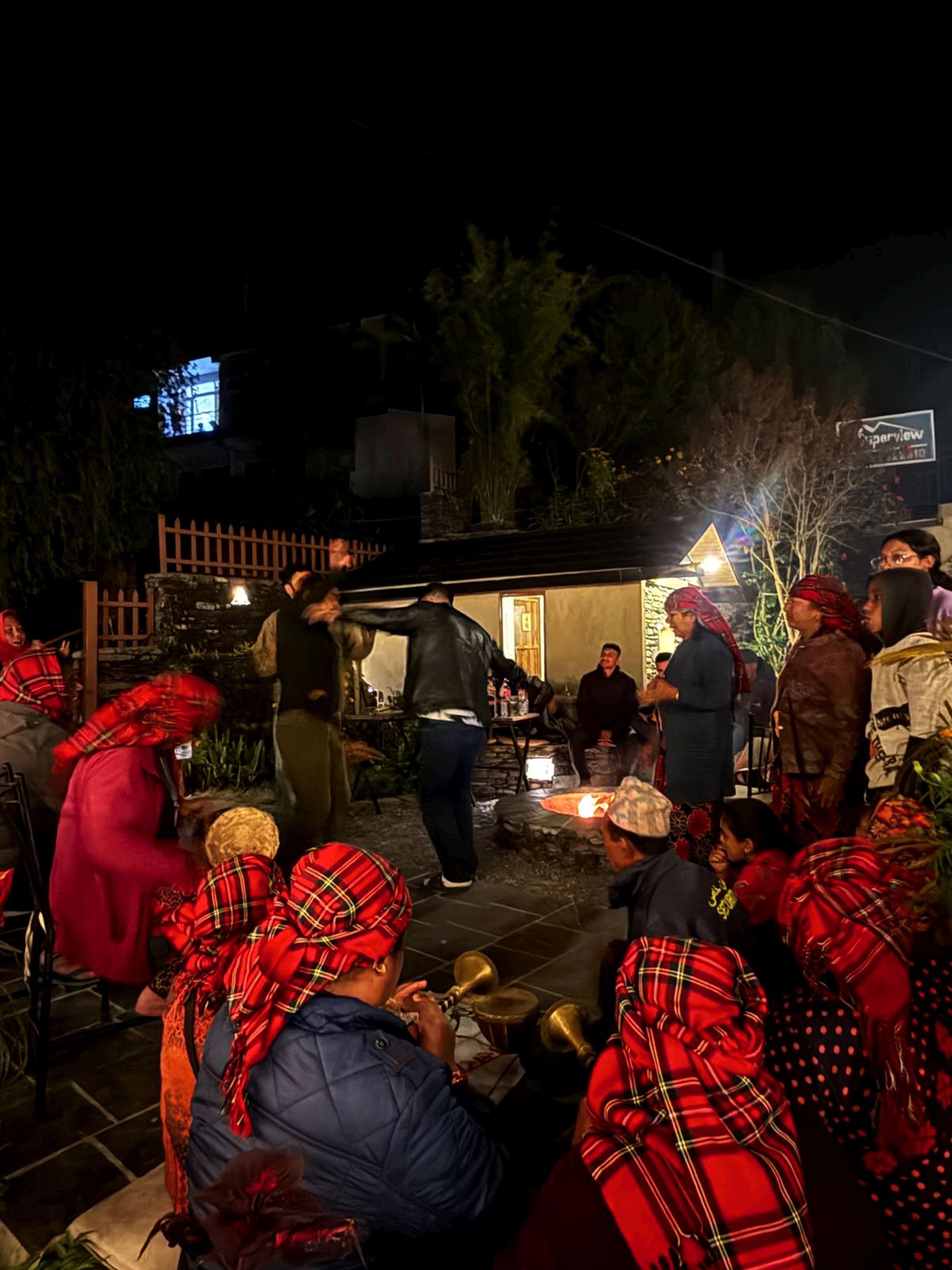
Listen, clap, dance
Nobody minds if you can't dance. Guests often join in.
- 10 PM
The last song
Then tea for the band, and bed for you.
Panche means five
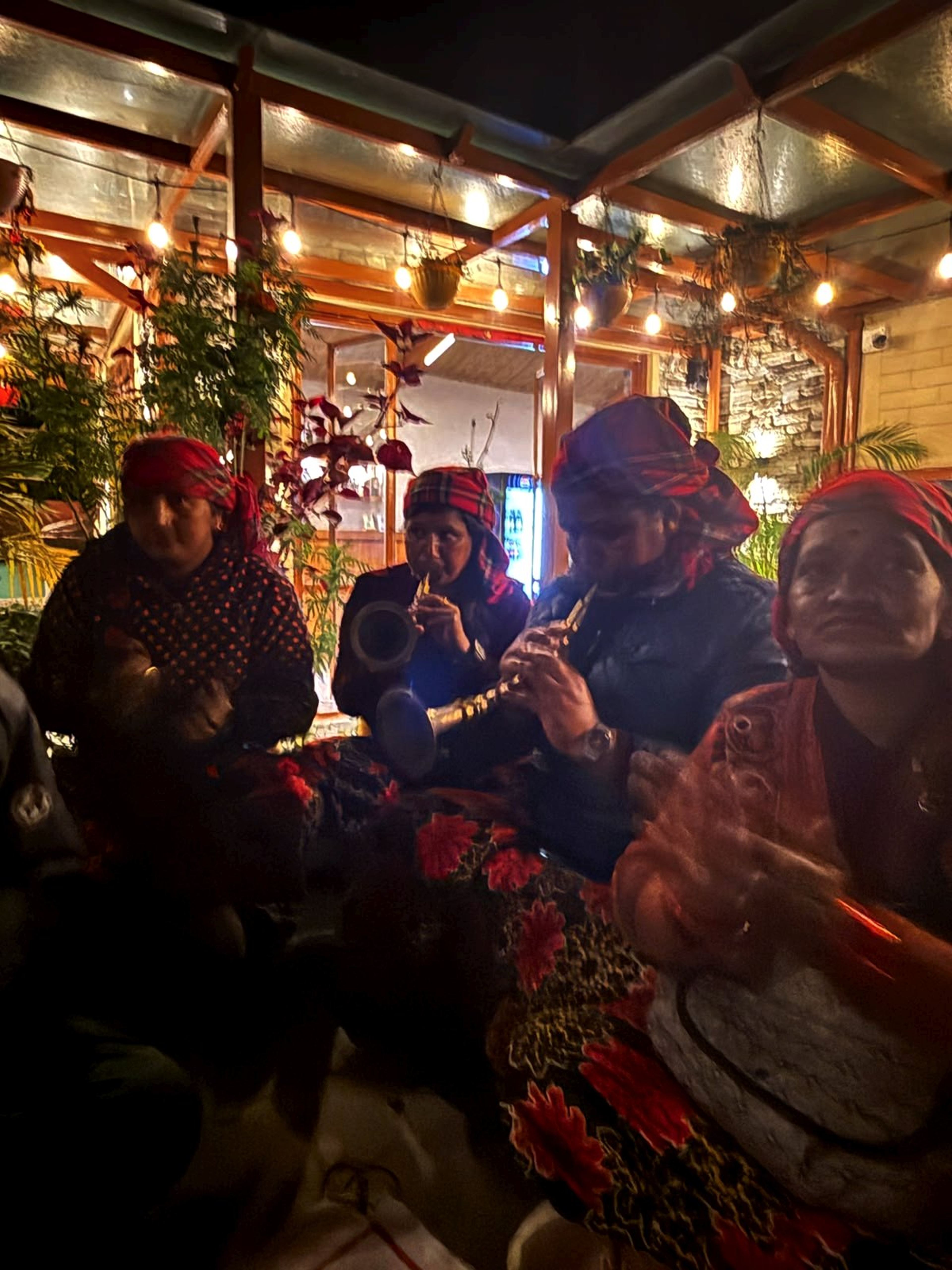
Panche Baja is a band of five instruments. It plays at weddings, festivals and other happy occasions all over Nepal, because its sound is thought to bring good luck.
Sanai, the reed pipe. A wooden pipe with a double reed and a flared brass bell. It carries the tune, high and bright, and it's the sound you'll remember.
Damaha, the big drum. A large kettle drum of metal covered with hide, struck with a stick. Its deep, slow beat is the heart of the band.
Tyamko, the small drum. A small kettle drum hung at the waist and played with two thin sticks. It answers the damaha with quick, crisp rolls.
Dholaki, the two-sided drum. A barrel drum with a skin at each end, played with the hands. It keeps the steady rhythm everyone dances to.
Jhyali, the cymbals. A pair of brass cymbals that clash on the beat and hold the whole band together.
Some bands add a narsinga, a long curved copper horn, blown at the big moments.
The Pariyar community
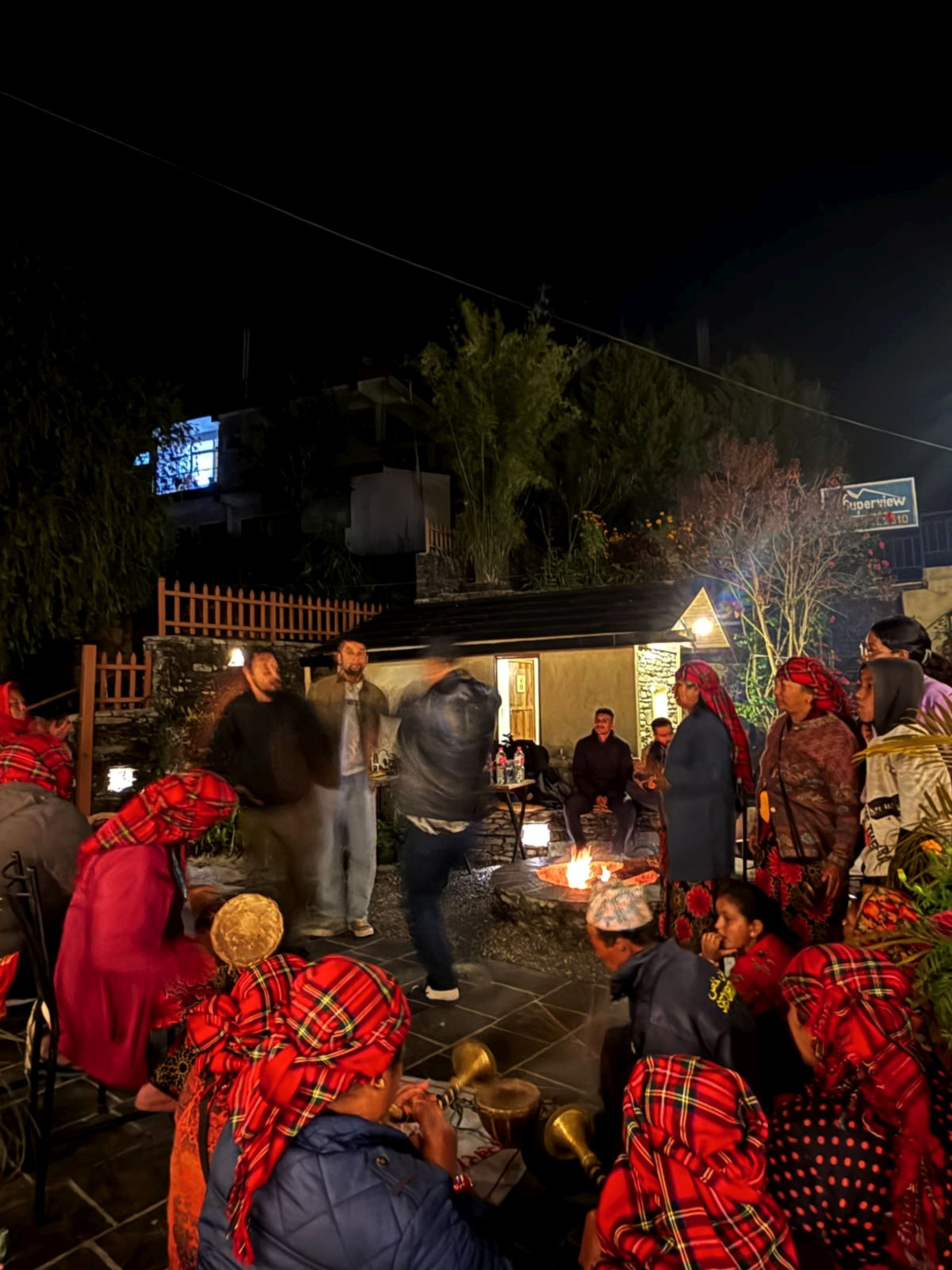
The Pariyar are among the original families of Sarangkot. For generations they have been Nepal's tailors, musicians and artisans: the people who sewed the clothes, played the band at every wedding and festival, and made much of what a village needed.
Even so, under the old caste system they were pushed to the margins of the very community they helped build. Life is better now, and Pariyar families are part of everyday social life in Sarangkot. But their skills are close to disappearing, because the younger generations have not taken up the work.
Didi-Bahini means sisters. These are Pariyar women, keeping their music alive.
A women's band
For generations the baja was played by men. In our village it's a group of women who keep it going, and that makes an evening with them rare, even in Nepal.
Keeping the band alive
Fewer young people learn the baja every year. Paid evenings give the women a reason to keep playing, and the group uses what it earns for social work in the village. Booking an evening is one of the best ways to help a tradition last.
What's included
Included
- The women's band, playing from 8 to 10 PM
- A fire in the garden if the evening is chilly
- Tea and refreshments for the band
Good to know
- Booking
- Please book a day ahead if you can, or at least a couple of hours before
- Weather
- It's outdoors in our garden, so it needs a dry evening. If it rains, we refund you
- Other guests
- Other guests staying with us usually come out to watch too
- Price
- USD 150 for the evening, not per person
- What it pays for
- The band, the fire, and tea and refreshments for the band members
More days out
All activities- A day in the village · Dhital, Dandagaun
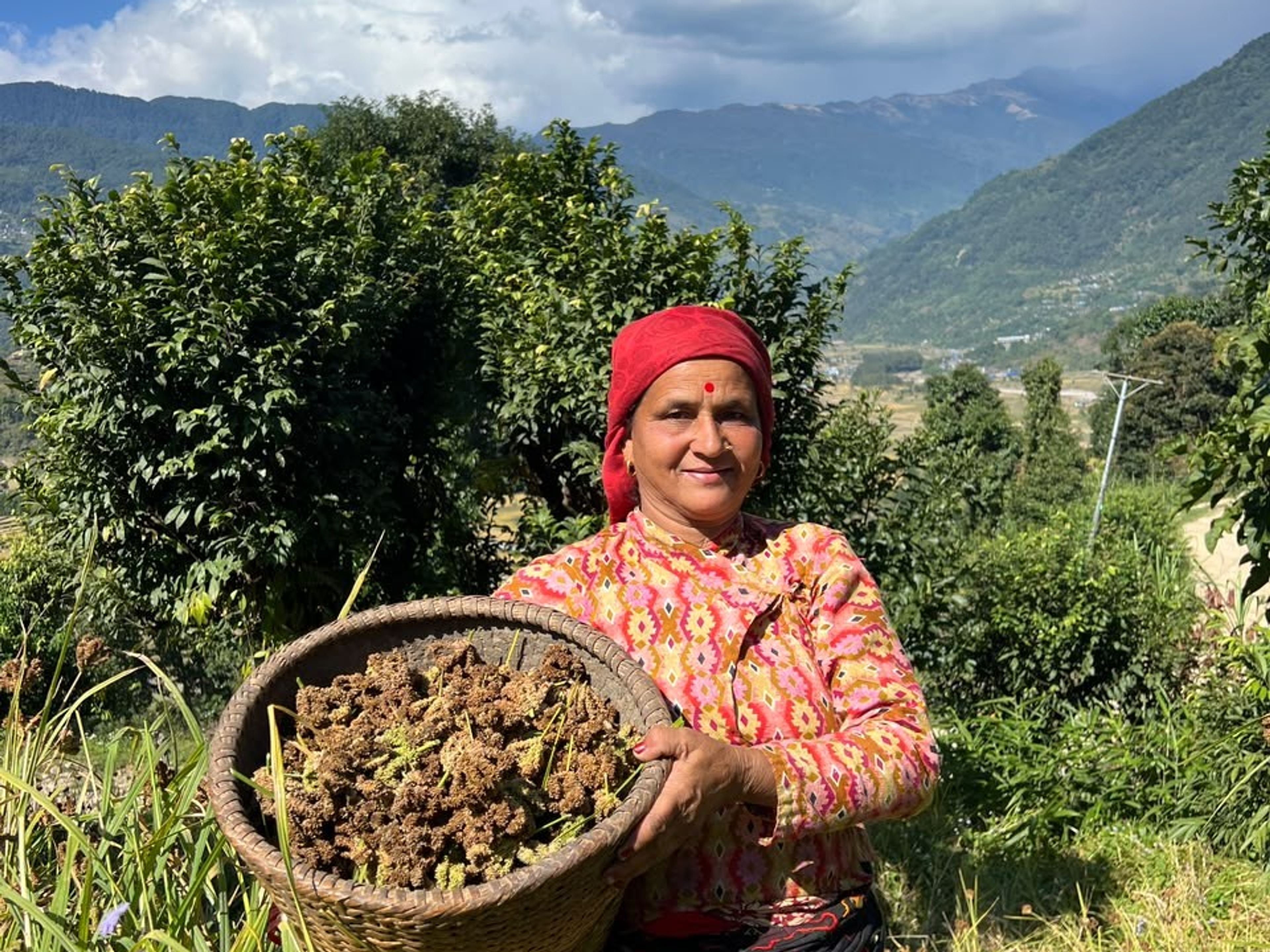
Nature, Nature, Nature!
About 6 hours · USD 60 per person, or USD 90 for one person - Sustainability · organic coffee
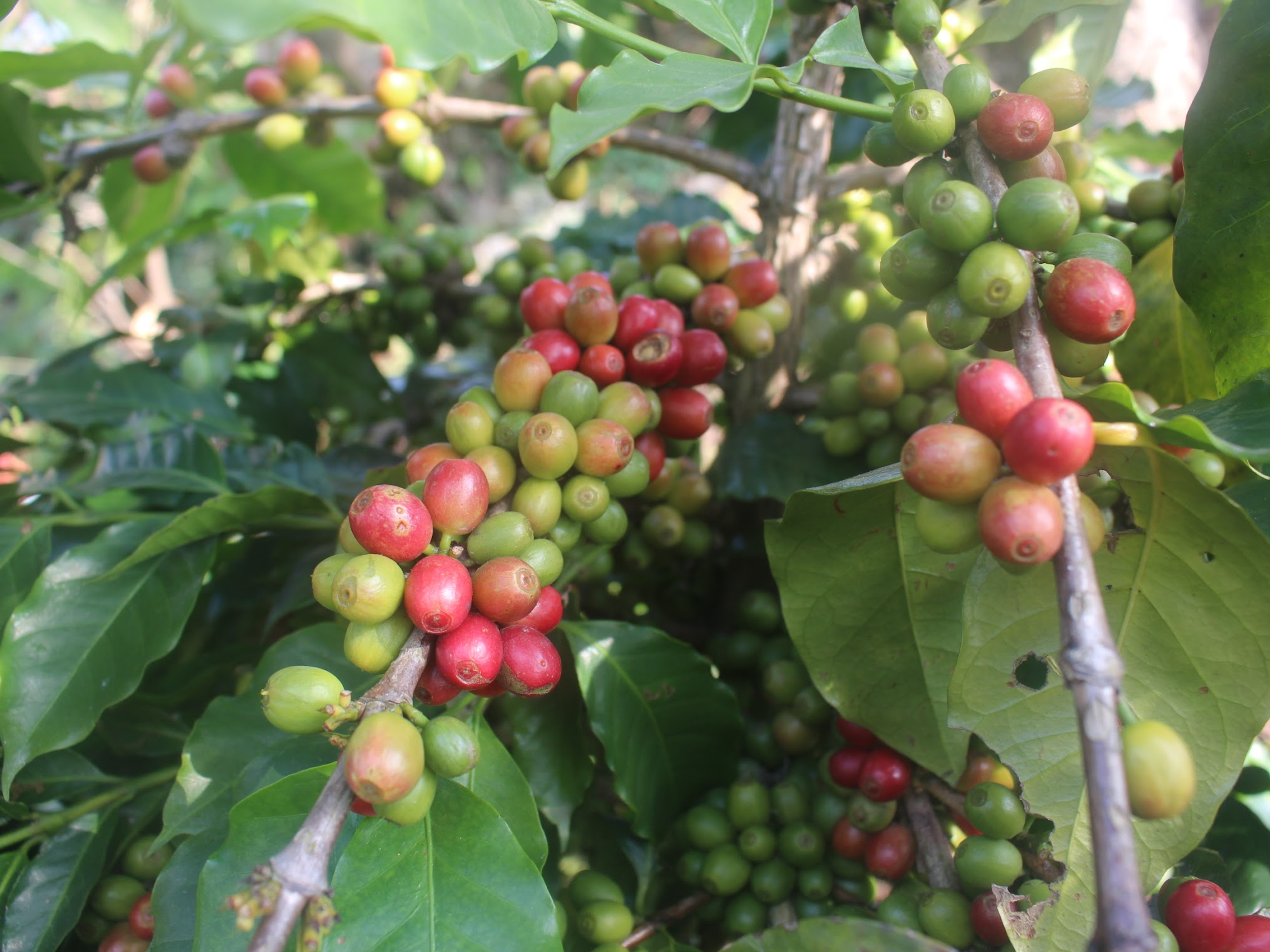
Sarangkot Secrets – Coffee Farm Village Tour
5–6 hours · From USD 50 per person - In-house · in our kitchen
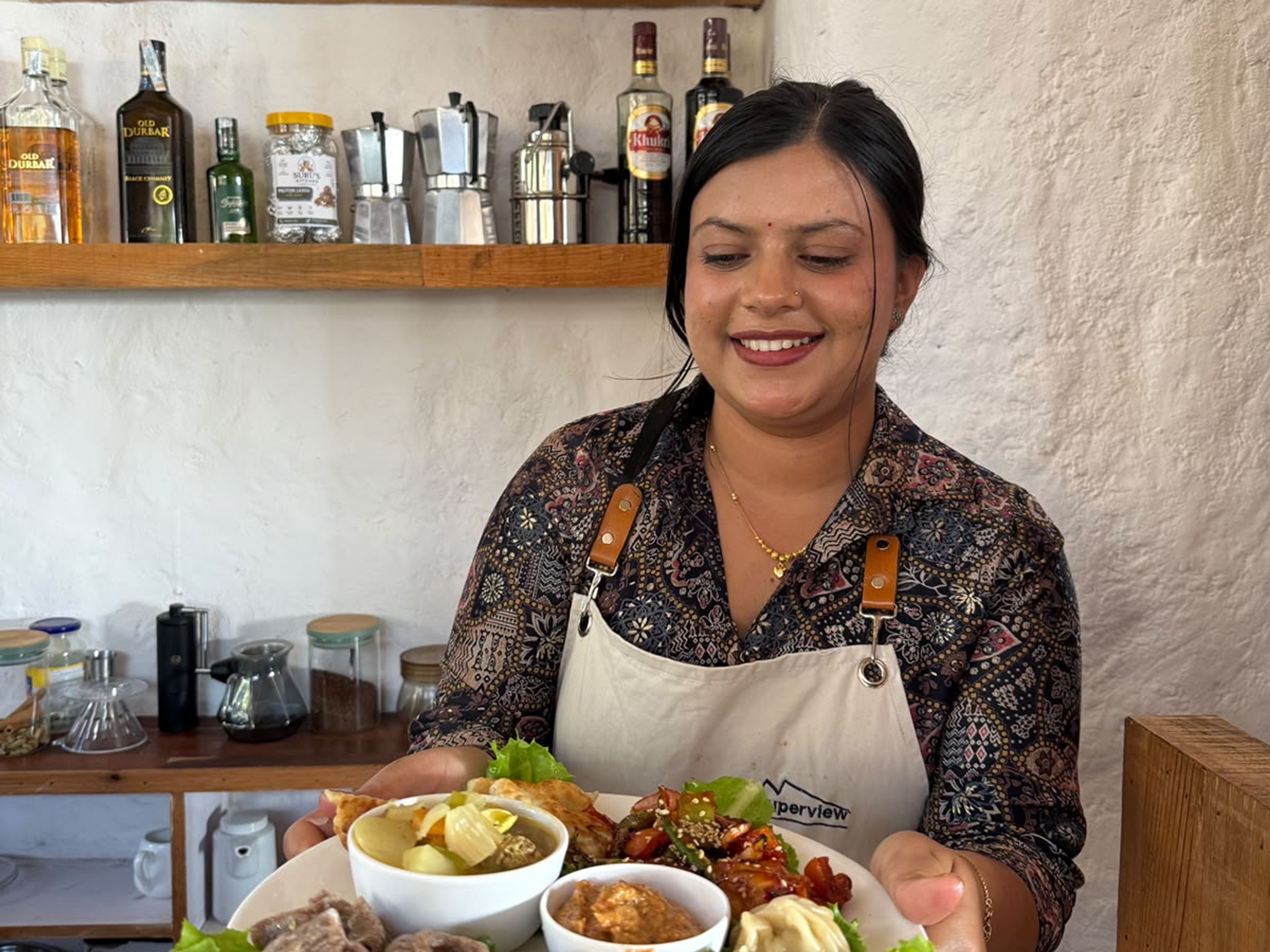
Momo Making Class
4 hours · USD 25 per person, or USD 40 for one person